


by Craig Laycock
Original article:
Facts
Built: 2020
Capacity: 70240-100000
Biggest event: Super Bowl LVI in 2022
How do you feel about taking in a game at the most expensive stadium ever built in human history at a whopping $5.5bn. Good? Slightly numbed by the size of the numbers? Worried that the game’s gone? Valid.
But while it might not have the slightly beaten-up charm of a parochial football stadium in England, this temple to sports, built by Arsenal and Rams owner/chairman Stanley Korenke and opened in 2020, is an absolute engineering marvel.
A techno-wonder
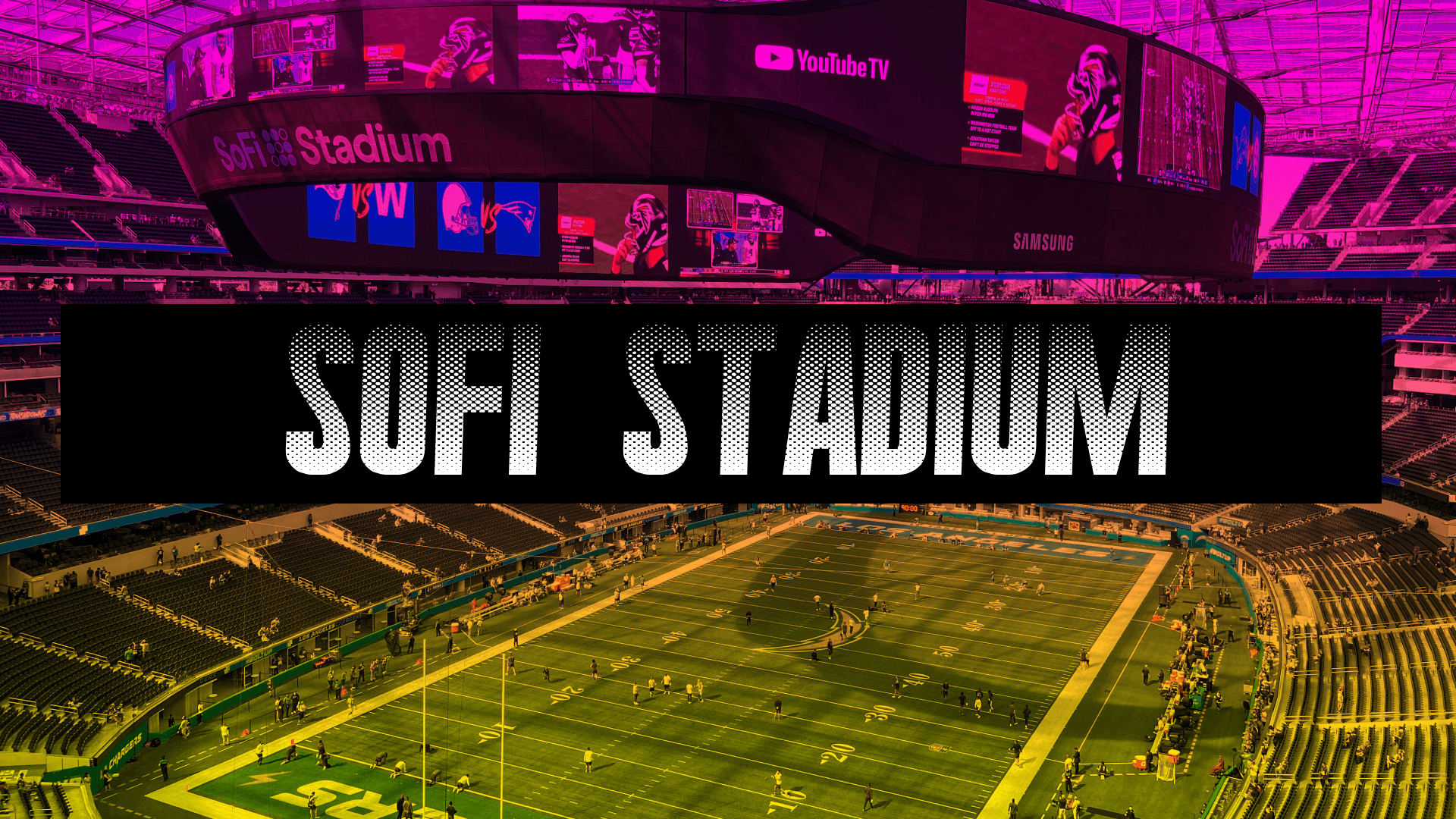
Its “Infinity Screen” alone, hanging from the roof, weighs 997,000 kilograms. You didn’t misread that. 997,000 kilograms. It’s a fully-featured 360-degree 4K HDR video board.
The translucent roof is full of 27,000 embedded LED “pucks”, which can project high resolution images upwards to aircraft passengers. Absolutely insane.
I personally can’t wait for the window views from passengers of slow motion replays of Bosnia’s Esmir Bajraktarević nodding wide from 10,000 ft.
The adaptations
Before the run up to the tournament, the pitch was artificial, but for the World Cup they’re switching over to 74,000 square feet of natural grass. They’ve even brought in giant LED lighting rigs to generate artificial sunlight 18 hours a day to keep grass alive under the roof.
They’ve also had to take out some corner seats (around 400 in all) to make room for the wider 68-meter football pitches FIFA require.
It’ll also technically be called “Los Angeles Stadium” during the tournament due to FIFA sponsorship rules.
Built to last
It’s also completely earthquake-resistant, having been built inside a 100-foot-wide “moat”, meaning the roof and the bowl can move independently during a tremor. Hopefully it won’t be a needed feature during the World Cup, but it’s always good to be prepared.
The roof is free-standing and doesn’t actually touch the walls and is designed to “pull in” ocean breezes from the Pacific ocean. Sounds like a bit of a nightmare when you’re 1 on 1 with the keeper, to be honest.
Our verdict
We’ve done our research and have confirmed that the stadium will have those beers that fill up from the bottom, so you can breathe easily if you were worried about that.
Will it have the heart and soul of somewhere like the Estadio Azteca? Probably not. But it will be something big, bold, beautiful and very American. Which is what we all hope for from a USA World Cup.
5 min read


Facts
Built: 2020
Capacity: 70240-100000
Biggest event: Super Bowl LVI in 2022
How do you feel about taking in a game at the most expensive stadium ever built in human history at a whopping $5.5bn. Good? Slightly numbed by the size of the numbers? Worried that the game’s gone? Valid.
But while it might not have the slightly beaten-up charm of a parochial football stadium in England, this temple to sports, built by Arsenal and Rams owner/chairman Stanley Korenke and opened in 2020, is an absolute engineering marvel.
A techno-wonder
Its “Infinity Screen” alone, hanging from the roof, weighs 997,000 kilograms. You didn’t misread that. 997,000 kilograms. It’s a fully-featured 360-degree 4K HDR video board.
The translucent roof is full of 27,000 embedded LED “pucks”, which can project high resolution images upwards to aircraft passengers. Absolutely insane.
I personally can’t wait for the window views from passengers of slow motion replays of Bosnia’s Esmir Bajraktarević nodding wide from 10,000 ft.
The adaptations
Before the run up to the tournament, the pitch was artificial, but for the World Cup they’re switching over to 74,000 square feet of natural grass. They’ve even brought in giant LED lighting rigs to generate artificial sunlight 18 hours a day to keep grass alive under the roof.
They’ve also had to take out some corner seats (around 400 in all) to make room for the wider 68-meter football pitches FIFA require.
It’ll also technically be called “Los Angeles Stadium” during the tournament due to FIFA sponsorship rules.
Built to last
It’s also completely earthquake-resistant, having been built inside a 100-foot-wide “moat”, meaning the roof and the bowl can move independently during a tremor. Hopefully it won’t be a needed feature during the World Cup, but it’s always good to be prepared.
The roof is free-standing and doesn’t actually touch the walls and is designed to “pull in” ocean breezes from the Pacific ocean. Sounds like a bit of a nightmare when you’re 1 on 1 with the keeper, to be honest.
Our verdict
We’ve done our research and have confirmed that the stadium will have those beers that fill up from the bottom, so you can breathe easily if you were worried about that.
Will it have the heart and soul of somewhere like the Estadio Azteca? Probably not. But it will be something big, bold, beautiful and very American. Which is what we all hope for from a USA World Cup.
SoFi Stadium: Very high-tech, very American
SoGood
Original article:
Facts
Built: 2020
Capacity: 70240-100000
Biggest event: Super Bowl LVI in 2022
How do you feel about taking in a game at the most expensive stadium ever built in human history at a whopping $5.5bn. Good? Slightly numbed by the size of the numbers? Worried that the game’s gone? Valid.
But while it might not have the slightly beaten-up charm of a parochial football stadium in England, this temple to sports, built by Arsenal and Rams owner/chairman Stanley Korenke and opened in 2020, is an absolute engineering marvel.
A techno-wonder
Its “Infinity Screen” alone, hanging from the roof, weighs 997,000 kilograms. You didn’t misread that. 997,000 kilograms. It’s a fully-featured 360-degree 4K HDR video board.
The translucent roof is full of 27,000 embedded LED “pucks”, which can project high resolution images upwards to aircraft passengers. Absolutely insane.
I personally can’t wait for the window views from passengers of slow motion replays of Bosnia’s Esmir Bajraktarević nodding wide from 10,000 ft.
The adaptations
Before the run up to the tournament, the pitch was artificial, but for the World Cup they’re switching over to 74,000 square feet of natural grass. They’ve even brought in giant LED lighting rigs to generate artificial sunlight 18 hours a day to keep grass alive under the roof.
They’ve also had to take out some corner seats (around 400 in all) to make room for the wider 68-meter football pitches FIFA require.
It’ll also technically be called “Los Angeles Stadium” during the tournament due to FIFA sponsorship rules.
Built to last
It’s also completely earthquake-resistant, having been built inside a 100-foot-wide “moat”, meaning the roof and the bowl can move independently during a tremor. Hopefully it won’t be a needed feature during the World Cup, but it’s always good to be prepared.
The roof is free-standing and doesn’t actually touch the walls and is designed to “pull in” ocean breezes from the Pacific ocean. Sounds like a bit of a nightmare when you’re 1 on 1 with the keeper, to be honest.
Our verdict
We’ve done our research and have confirmed that the stadium will have those beers that fill up from the bottom, so you can breathe easily if you were worried about that.
Will it have the heart and soul of somewhere like the Estadio Azteca? Probably not. But it will be something big, bold, beautiful and very American. Which is what we all hope for from a USA World Cup.
5 min read
SoFi Stadium: Very high-tech, very American
SoGood
Facts
Built: 2020
Capacity: 70240-100000
Biggest event: Super Bowl LVI in 2022
How do you feel about taking in a game at the most expensive stadium ever built in human history at a whopping $5.5bn. Good? Slightly numbed by the size of the numbers? Worried that the game’s gone? Valid.
But while it might not have the slightly beaten-up charm of a parochial football stadium in England, this temple to sports, built by Arsenal and Rams owner/chairman Stanley Korenke and opened in 2020, is an absolute engineering marvel.
A techno-wonder
Its “Infinity Screen” alone, hanging from the roof, weighs 997,000 kilograms. You didn’t misread that. 997,000 kilograms. It’s a fully-featured 360-degree 4K HDR video board.
The translucent roof is full of 27,000 embedded LED “pucks”, which can project high resolution images upwards to aircraft passengers. Absolutely insane.
I personally can’t wait for the window views from passengers of slow motion replays of Bosnia’s Esmir Bajraktarević nodding wide from 10,000 ft.
The adaptations
Before the run up to the tournament, the pitch was artificial, but for the World Cup they’re switching over to 74,000 square feet of natural grass. They’ve even brought in giant LED lighting rigs to generate artificial sunlight 18 hours a day to keep grass alive under the roof.
They’ve also had to take out some corner seats (around 400 in all) to make room for the wider 68-meter football pitches FIFA require.
It’ll also technically be called “Los Angeles Stadium” during the tournament due to FIFA sponsorship rules.
Built to last
It’s also completely earthquake-resistant, having been built inside a 100-foot-wide “moat”, meaning the roof and the bowl can move independently during a tremor. Hopefully it won’t be a needed feature during the World Cup, but it’s always good to be prepared.
The roof is free-standing and doesn’t actually touch the walls and is designed to “pull in” ocean breezes from the Pacific ocean. Sounds like a bit of a nightmare when you’re 1 on 1 with the keeper, to be honest.
Our verdict
We’ve done our research and have confirmed that the stadium will have those beers that fill up from the bottom, so you can breathe easily if you were worried about that.
Will it have the heart and soul of somewhere like the Estadio Azteca? Probably not. But it will be something big, bold, beautiful and very American. Which is what we all hope for from a USA World Cup.
5 min read