

by Craig Laycock
Original article:

Group F Preview
Netherlands, Japan, Sweden, Tunisia
World Rankings:
Netherlands 7th
Japan 18th
Sweden 38th
Tunisia 44th
GROUP STRENGTH
This is a potential modern “Group of Death”, with a couple of very established tournament operators and some lagging FIFA ratings potentially contributing to an interesting draw.
Overall, the group is ranked 3rd in terms of theoretical strength, but that is definitely underselling it - Sweden’s initial underperformance in qualifying comes with bags of individual quality potential disguised in there.
Tunisia’s early exit at AFCON (Round of 16) may not have been fully representative of their true potential, either. We think both teams have enough strength to challenge the group and turn what looks to be simple on rankings alone into a potential quagmire.
***
Netherlands
A flawless qualifying campaign, unbeaten and topping their group. Formidable personalities. Tournament steel. 27 goals in 8 matches. It’s impossible to rule them out of another great run in 2026.
They look particularly strong in defence. With the likes of Virgil van Dijk, Micky van de Ven and Nathan Aké in the side, you wouldn’t bet on many teams beating them for physicality or reading of the game.
One blow for them is the loss of Xavi Simons to injury. Club form is also a question mark. Three Liverpool players come in with their individual strengths intact, but playing for a club side that is less “heavy metal”, and more “wet clay” of late.
Nevertheless, you would expect Virgil van Dijk, Ryan Gravenberch and Cody Gakpo to turn up and show what they’re about at international level as a catharsis for a deeply frustrating season at Anfield.
Will they win the whole thing? Probably not, but stranger things have happened. They’re always in the conversation.
Play style:
Under Ronald Koeman, Netherlands play a “solid-first” style of football with elite defensive prowess, physical excellence and the power to explode forwards. As we’ve noted in our previews, many sides at the 2026 World Cup will be playing this way, but few have the defensive solidity and explosive power / technicality of the Netherlands, who will be one of the most glittering exponents of the style at WC 2026.
They play a very high back line and rely on supreme recovery pace to make up for that if teams try to find a way in behind with direct pace or long balls. Mich van der Ven doesn’t get beaten by many in a foot race, and when the ball is intercepted and turned over again they are lethal on the break. Expect a few goals to come from sides thinking (or more accurately hoping) they can exploit the high back line and finding themselves quickly under the cosh themselves on the turnover.
Expected formation:
Flexible. A 5-2-3 / 4-3-2-1 when they’re up against elite opponents, and a forward-minded 4-3-3 against weaker teams. The ability to switch flawlessly between these playstyles is a key reason we’re tipping them to have a good tournament: they’re set up to play as “equals” or “betters”.
Chances:
Solid, functional, with elite individual talent and absolutely devastating on the attack. You would say that is the hallmark of a tournament-winning side. While I’m holding short of that prediction, I’m nevertheless saying they have the potential to at least make the semis.
***
Japan
If you look at Japan’s qualification campaign, you’d say they’re absolutely ones to watch. Absolutely cruising their way through, they ended up as the first qualifying nation in the world for the 2026 World Cup (disregarding the co-hosts).
6 games, 6 wins, 24 scored and none conceded in the second round of qualifying, coupled with a strong performance to top their third round group ahead of Australia suggests they’ll not be pushovers in 2026. Their new tactical style under Hajime Moriyasu heavily points to them not being here to make up the numbers.
Play style:
Although known typically for being hard to beat with relentless endurance and speedy on the counter, Japan now shape up more like possession-hungry generals ready to impose themselves on games.
Players are expected to carry the weight of multiple tactical plans and adapt on the field without relying on instruction. They work together as a unit to press high, coordinating to deny space and passing lanes and try to create turnovers as quickly as possible.
Their squad is now heavily European-based, as opposed to the natively-located squads of the past with players at the likes of LIverpool, Bayern Munich and Real Sociedad injecting quality and tactical nous.
Mitoma, however, finds himself out with a crushing hamstring injury at the end of the season. Expect them to be less reliant on his pace, relying instead on the likes of Takefusa Kubo as their key creative outlet, to intricately play through even the most organised of defences and bring other players into the game.
Visually, the way Japan plays could be very pleasing and one of the surprises of the tournament.
Expected formation:
3-4-2-1 turning into a 3-4-3 or 5-4-1 depending on the situation (attack or defend) with an emphasis on tactical fluidity instigated by the players depending on the situation being faced. Essentially, every player operates with a mental map of “what-if” scenarios, and they all trigger at the same time as players are taught to recognise evolving situations.
If it comes off, it’s elite coaching and a demonstration of incredible intelligence from the players.
Chances:
In theory they’ll get out of the group in 2nd. In reality, it depends on their mentality. If they find themselves shaken on the big stage, the finely tuned plans and mental maps could be shaken and we might see them fighting for 3rd spot.
***
Sweden
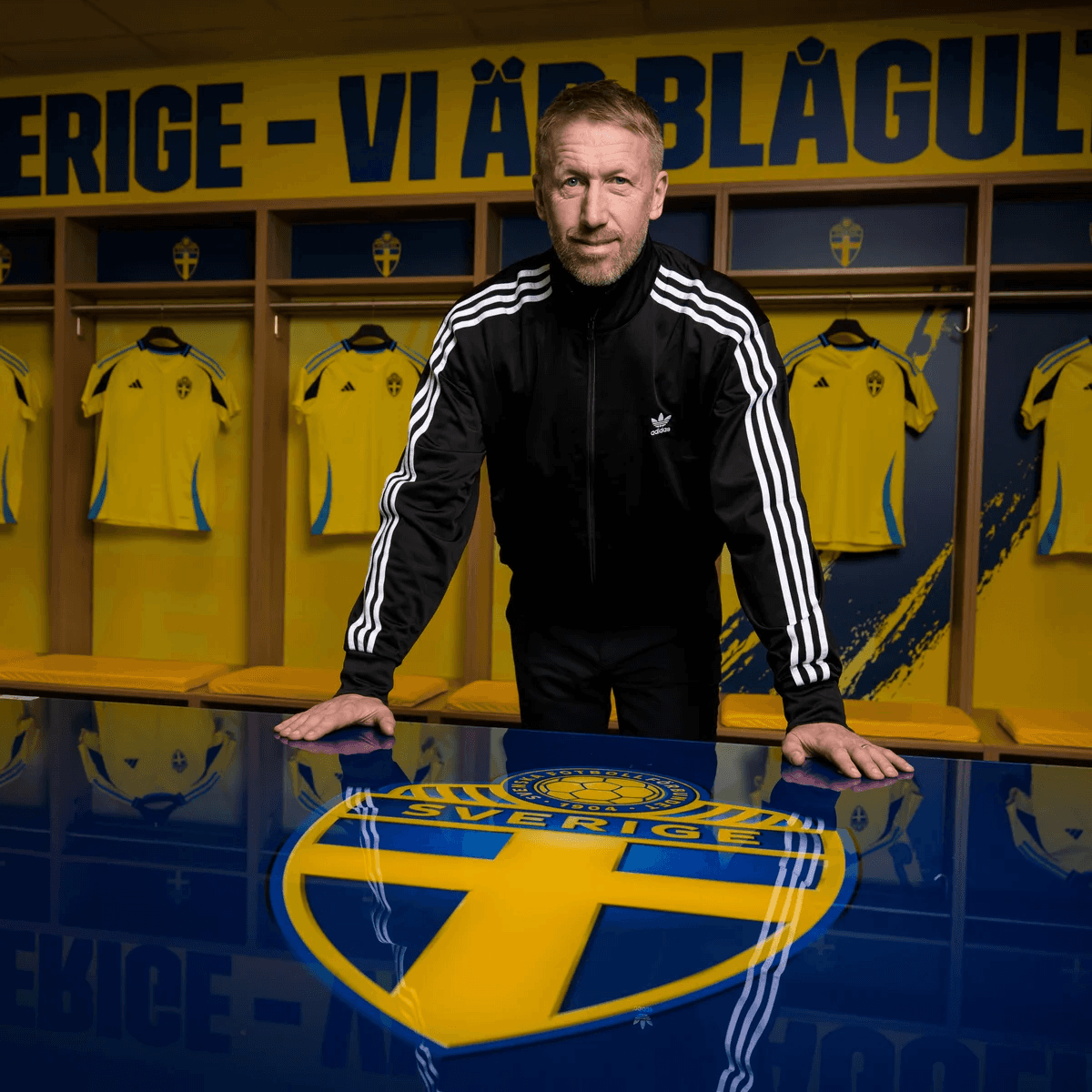
I’m based in Sweden, and I can tell you unequivocally that Potter-mania is in full swing. Credited with single-handedly rescuing Sweden from a frankly dogshit qualifying campaign, comparisons to the bespectacled magician that is his namesake are rife.
It’s easy to see why. Their qualifying disaster saw them finish rock bottom of their group with 2 points from 6 games against Switzerland, Kosovo and Slovenia.
Yet there was a get out of jail free card waiting for Sweden, as they qualified for the play-offs via the Nations League (they were one of the best four Nations League group winners outside the top two of their qualifying group).
Critics would argue they should have been dead and buried, but then swept in the magician on his broomstick (or free Volvo) and he masterminded victories over Ukraine and Poland to seal the deal and bag a place at the World Cup.
Because of the chaotic nature of that campaign it can be a little tricky to extrapolate performance, so we’re looking at some of the markers that define Potter’s teams.
Play style:
Potter typically plays with a style that relies on smart use of possession to control games when his teams have the ball, and a high intensity press when they don’t.
But he can be hard to pin down. Some might say it’s like nailing jelly to a wall, others might call it “tactical flexibility”. Whatever the parlance, he’s not afraid to focus his tactics around whatever strengths he has available to him individually in the squad at any given time, and he’s also not afraid to respond to the opposition.
He’s used plenty of different formations over the years, with Brighton famously using 10 shapes in 2021/2022.
There is a pattern to how his teams play, though, usually relying on passing triangles and build up along the flanks, with underlapping or overlapping runs causing trouble, and strikers designed to drop deep or mess with defenders to create space for unexpected cameos in the box.
One criticism of his style is the lack of his focal point in attack coming into the game sometimes means they create more chances than they can convert. Is he the man to get the right form out of faltering talisman Alexander Isak alongside the lethal Viktor Gyökeres?
As a fantasy strike pairing, few would immediately dismiss it. If Isak can drift into wide spaces or deep to link up play, Gyökeres can play the focal point with little tactical instruction required. His directness and high press intensity should cause defenders the problems we’ve seen him cause while at Arsenal (or Coventry if you’re a Championship football fan like myself).
Expected formation:
Who knows? Could be anything. He usually goes for a fluid 3-4-1-2 but expect the people running the graphics at the World Cup to have a nightmare figuring out what shape he’s gone for on any given day.
Chances:
They’re an enigma inside a doughnut hole inside an enigma inside a riddle. The reality is, they had a horrible campaign, Potter has swept in but has had little time with the team and Isak is bang out of form.
But if everything can click, and Potter can wave his magic wand you could see Sweden finishing 3rd in this group and the same siege mentality kicking in that saw them through the play-offs.
Getting off the fence though, I think they’ll exit at the Round of 32 stage.
***
Tunisia
Tunisia join the 2026 World Cup with a gritty resilience that saw them go the whole campaign without conceding a single goal (uh-oh… two teams in one group with that accolade? Japan v Tunisia could be interesting.)
They dominated their group, finishing 13 points clear of their nearest opponents Namibia in the table, which contrasts to a disastrous AFCON 2025 that saw them shoot themselves in the foot with an over-cautious playstyle that left them exiting at the Round of 16 stage.
It doesn’t make it easy to analyse their chances, but what it does show is they’re likely to be extremely resilient, but prone to over-caution in knockout games where they will need a goal to progress. They ended up having a “head loss” moment, conceding a 96th minute penalty to eliminate themselves from the tournament.
They sacked their manager within 24 hours, and reportedly didn’t even let him on the team bus after the game. That’s the kind of rage-induced Football Manager-style pettiness we can get behind here at The Tournament Scout.
See why this is such a messy, hard to call group?
Play style:
Under their new manager Sabri Lamouchi, expect Tunisia to be focused on mental strength and deeper resilience as a direct reaction to their AFCON disaster.
They play a very solid double-pivot with Rani Khedira and Ellyes Skhiri covering the centre-backs and attempting to dictate the tempo with a level-headed calmness. Expect them to project a cool, calm, collected playstyle at the tournament, even if they are under pressure.
Again, though, will that calmness cost them when they’re chasing goals? This team doesn’t seem to know how to score and instead focuses too heavily on not losing. Can Lamouchi instil a sense of attacking intensity to this side? Or will they more probably double-down on a style they are used to with an increased willingness to simply not lose?
Expected formation:
4-2-3-1, or 4-5-1 out of possession. The double pivot is usually the centre of attention so expect everything offensively or defensively to start there. The full backs play aggressively to try and exploit space. But they don’t do it as well as some other teams in the competition.
Chances:
I don’t rate them, in honesty. They seem to have been going through a bit of an identity crisis since AFCON but rather than throw the baby out with the bathwater, they have simply doubled down on a “keep goals out at all costs” mentality, slightly dressed up differently to project an aura of calm.
I think it’ll be interpreted as too-laid-back and I don’t expect them to cause any problems even if they are difficult to beat. Netherlands and Japan should both beat them.
The Tournament Scout’s Prediction
Netherlands win the group
Japan in 2nd place
Sweden 3rd, and one of the top 8 to enter the round of the 32
Tunisia out, sacking their manager, banning him from the team bus and having another national crisis as a result
25 min read

Group F Preview: A modern group of death?
Our biggest preview yet, for what might be the messiest group of all.
25 min read
Group F Preview
Netherlands, Japan, Sweden, Tunisia
World Rankings:
Netherlands 7th
Japan 18th
Sweden 38th
Tunisia 44th
GROUP STRENGTH
This is a potential modern “Group of Death”, with a couple of very established tournament operators and some lagging FIFA ratings potentially contributing to an interesting draw.
Overall, the group is ranked 3rd in terms of theoretical strength, but that is definitely underselling it - Sweden’s initial underperformance in qualifying comes with bags of individual quality potential disguised in there.
Tunisia’s early exit at AFCON (Round of 16) may not have been fully representative of their true potential, either. We think both teams have enough strength to challenge the group and turn what looks to be simple on rankings alone into a potential quagmire.
***
Netherlands
A flawless qualifying campaign, unbeaten and topping their group. Formidable personalities. Tournament steel. 27 goals in 8 matches. It’s impossible to rule them out of another great run in 2026.
They look particularly strong in defence. With the likes of Virgil van Dijk, Micky van de Ven and Nathan Aké in the side, you wouldn’t bet on many teams beating them for physicality or reading of the game.
One blow for them is the loss of Xavi Simons to injury. Club form is also a question mark. Three Liverpool players come in with their individual strengths intact, but playing for a club side that is less “heavy metal”, and more “wet clay” of late.
Nevertheless, you would expect Virgil van Dijk, Ryan Gravenberch and Cody Gakpo to turn up and show what they’re about at international level as a catharsis for a deeply frustrating season at Anfield.
Will they win the whole thing? Probably not, but stranger things have happened. They’re always in the conversation.
Play style:
Under Ronald Koeman, Netherlands play a “solid-first” style of football with elite defensive prowess, physical excellence and the power to explode forwards. As we’ve noted in our previews, many sides at the 2026 World Cup will be playing this way, but few have the defensive solidity and explosive power / technicality of the Netherlands, who will be one of the most glittering exponents of the style at WC 2026.
They play a very high back line and rely on supreme recovery pace to make up for that if teams try to find a way in behind with direct pace or long balls. Mich van der Ven doesn’t get beaten by many in a foot race, and when the ball is intercepted and turned over again they are lethal on the break. Expect a few goals to come from sides thinking (or more accurately hoping) they can exploit the high back line and finding themselves quickly under the cosh themselves on the turnover.
Expected formation:
Flexible. A 5-2-3 / 4-3-2-1 when they’re up against elite opponents, and a forward-minded 4-3-3 against weaker teams. The ability to switch flawlessly between these playstyles is a key reason we’re tipping them to have a good tournament: they’re set up to play as “equals” or “betters”.
Chances:
Solid, functional, with elite individual talent and absolutely devastating on the attack. You would say that is the hallmark of a tournament-winning side. While I’m holding short of that prediction, I’m nevertheless saying they have the potential to at least make the semis.
***
Japan
If you look at Japan’s qualification campaign, you’d say they’re absolutely ones to watch. Absolutely cruising their way through, they ended up as the first qualifying nation in the world for the 2026 World Cup (disregarding the co-hosts).
6 games, 6 wins, 24 scored and none conceded in the second round of qualifying, coupled with a strong performance to top their third round group ahead of Australia suggests they’ll not be pushovers in 2026. Their new tactical style under Hajime Moriyasu heavily points to them not being here to make up the numbers.
Play style:
Although known typically for being hard to beat with relentless endurance and speedy on the counter, Japan now shape up more like possession-hungry generals ready to impose themselves on games.
Players are expected to carry the weight of multiple tactical plans and adapt on the field without relying on instruction. They work together as a unit to press high, coordinating to deny space and passing lanes and try to create turnovers as quickly as possible.
Their squad is now heavily European-based, as opposed to the natively-located squads of the past with players at the likes of LIverpool, Bayern Munich and Real Sociedad injecting quality and tactical nous.
Mitoma, however, finds himself out with a crushing hamstring injury at the end of the season. Expect them to be less reliant on his pace, relying instead on the likes of Takefusa Kubo as their key creative outlet, to intricately play through even the most organised of defences and bring other players into the game.
Visually, the way Japan plays could be very pleasing and one of the surprises of the tournament.
Expected formation:
3-4-2-1 turning into a 3-4-3 or 5-4-1 depending on the situation (attack or defend) with an emphasis on tactical fluidity instigated by the players depending on the situation being faced. Essentially, every player operates with a mental map of “what-if” scenarios, and they all trigger at the same time as players are taught to recognise evolving situations.
If it comes off, it’s elite coaching and a demonstration of incredible intelligence from the players.
Chances:
In theory they’ll get out of the group in 2nd. In reality, it depends on their mentality. If they find themselves shaken on the big stage, the finely tuned plans and mental maps could be shaken and we might see them fighting for 3rd spot.
***
Sweden
I’m based in Sweden, and I can tell you unequivocally that Potter-mania is in full swing. Credited with single-handedly rescuing Sweden from a frankly dogshit qualifying campaign, comparisons to the bespectacled magician that is his namesake are rife.
It’s easy to see why. Their qualifying disaster saw them finish rock bottom of their group with 2 points from 6 games against Switzerland, Kosovo and Slovenia.
Yet there was a get out of jail free card waiting for Sweden, as they qualified for the play-offs via the Nations League (they were one of the best four Nations League group winners outside the top two of their qualifying group).
Critics would argue they should have been dead and buried, but then swept in the magician on his broomstick (or free Volvo) and he masterminded victories over Ukraine and Poland to seal the deal and bag a place at the World Cup.
Because of the chaotic nature of that campaign it can be a little tricky to extrapolate performance, so we’re looking at some of the markers that define Potter’s teams.
Play style:
Potter typically plays with a style that relies on smart use of possession to control games when his teams have the ball, and a high intensity press when they don’t.
But he can be hard to pin down. Some might say it’s like nailing jelly to a wall, others might call it “tactical flexibility”. Whatever the parlance, he’s not afraid to focus his tactics around whatever strengths he has available to him individually in the squad at any given time, and he’s also not afraid to respond to the opposition.
He’s used plenty of different formations over the years, with Brighton famously using 10 shapes in 2021/2022.
There is a pattern to how his teams play, though, usually relying on passing triangles and build up along the flanks, with underlapping or overlapping runs causing trouble, and strikers designed to drop deep or mess with defenders to create space for unexpected cameos in the box.
One criticism of his style is the lack of his focal point in attack coming into the game sometimes means they create more chances than they can convert. Is he the man to get the right form out of faltering talisman Alexander Isak alongside the lethal Viktor Gyökeres?
As a fantasy strike pairing, few would immediately dismiss it. If Isak can drift into wide spaces or deep to link up play, Gyökeres can play the focal point with little tactical instruction required. His directness and high press intensity should cause defenders the problems we’ve seen him cause while at Arsenal (or Coventry if you’re a Championship football fan like myself).
Expected formation:
Who knows? Could be anything. He usually goes for a fluid 3-4-1-2 but expect the people running the graphics at the World Cup to have a nightmare figuring out what shape he’s gone for on any given day.
Chances:
They’re an enigma inside a doughnut hole inside an enigma inside a riddle. The reality is, they had a horrible campaign, Potter has swept in but has had little time with the team and Isak is bang out of form.
But if everything can click, and Potter can wave his magic wand you could see Sweden finishing 3rd in this group and the same siege mentality kicking in that saw them through the play-offs.
Getting off the fence though, I think they’ll exit at the Round of 32 stage.
***
Tunisia
Tunisia join the 2026 World Cup with a gritty resilience that saw them go the whole campaign without conceding a single goal (uh-oh… two teams in one group with that accolade? Japan v Tunisia could be interesting.)
They dominated their group, finishing 13 points clear of their nearest opponents Namibia in the table, which contrasts to a disastrous AFCON 2025 that saw them shoot themselves in the foot with an over-cautious playstyle that left them exiting at the Round of 16 stage.
It doesn’t make it easy to analyse their chances, but what it does show is they’re likely to be extremely resilient, but prone to over-caution in knockout games where they will need a goal to progress. They ended up having a “head loss” moment, conceding a 96th minute penalty to eliminate themselves from the tournament.
They sacked their manager within 24 hours, and reportedly didn’t even let him on the team bus after the game. That’s the kind of rage-induced Football Manager-style pettiness we can get behind here at The Tournament Scout.
See why this is such a messy, hard to call group?
Play style:
Under their new manager Sabri Lamouchi, expect Tunisia to be focused on mental strength and deeper resilience as a direct reaction to their AFCON disaster.
They play a very solid double-pivot with Rani Khedira and Ellyes Skhiri covering the centre-backs and attempting to dictate the tempo with a level-headed calmness. Expect them to project a cool, calm, collected playstyle at the tournament, even if they are under pressure.
Again, though, will that calmness cost them when they’re chasing goals? This team doesn’t seem to know how to score and instead focuses too heavily on not losing. Can Lamouchi instil a sense of attacking intensity to this side? Or will they more probably double-down on a style they are used to with an increased willingness to simply not lose?
Expected formation:
4-2-3-1, or 4-5-1 out of possession. The double pivot is usually the centre of attention so expect everything offensively or defensively to start there. The full backs play aggressively to try and exploit space. But they don’t do it as well as some other teams in the competition.
Chances:
I don’t rate them, in honesty. They seem to have been going through a bit of an identity crisis since AFCON but rather than throw the baby out with the bathwater, they have simply doubled down on a “keep goals out at all costs” mentality, slightly dressed up differently to project an aura of calm.
I think it’ll be interpreted as too-laid-back and I don’t expect them to cause any problems even if they are difficult to beat. Netherlands and Japan should both beat them.
The Tournament Scout’s Prediction
Netherlands win the group
Japan in 2nd place
Sweden 3rd, and one of the top 8 to enter the round of the 32
Tunisia out, sacking their manager, banning him from the team bus and having another national crisis as a result
Group F Preview: A modern group of death?
Our biggest preview yet, for what might be the messiest group of all.
Original article:
Group F Preview
Netherlands, Japan, Sweden, Tunisia
World Rankings:
Netherlands 7th
Japan 18th
Sweden 38th
Tunisia 44th
GROUP STRENGTH
This is a potential modern “Group of Death”, with a couple of very established tournament operators and some lagging FIFA ratings potentially contributing to an interesting draw.
Overall, the group is ranked 3rd in terms of theoretical strength, but that is definitely underselling it - Sweden’s initial underperformance in qualifying comes with bags of individual quality potential disguised in there.
Tunisia’s early exit at AFCON (Round of 16) may not have been fully representative of their true potential, either. We think both teams have enough strength to challenge the group and turn what looks to be simple on rankings alone into a potential quagmire.
***
Netherlands
A flawless qualifying campaign, unbeaten and topping their group. Formidable personalities. Tournament steel. 27 goals in 8 matches. It’s impossible to rule them out of another great run in 2026.
They look particularly strong in defence. With the likes of Virgil van Dijk, Micky van de Ven and Nathan Aké in the side, you wouldn’t bet on many teams beating them for physicality or reading of the game.
One blow for them is the loss of Xavi Simons to injury. Club form is also a question mark. Three Liverpool players come in with their individual strengths intact, but playing for a club side that is less “heavy metal”, and more “wet clay” of late.
Nevertheless, you would expect Virgil van Dijk, Ryan Gravenberch and Cody Gakpo to turn up and show what they’re about at international level as a catharsis for a deeply frustrating season at Anfield.
Will they win the whole thing? Probably not, but stranger things have happened. They’re always in the conversation.
Play style:
Under Ronald Koeman, Netherlands play a “solid-first” style of football with elite defensive prowess, physical excellence and the power to explode forwards. As we’ve noted in our previews, many sides at the 2026 World Cup will be playing this way, but few have the defensive solidity and explosive power / technicality of the Netherlands, who will be one of the most glittering exponents of the style at WC 2026.
They play a very high back line and rely on supreme recovery pace to make up for that if teams try to find a way in behind with direct pace or long balls. Mich van der Ven doesn’t get beaten by many in a foot race, and when the ball is intercepted and turned over again they are lethal on the break. Expect a few goals to come from sides thinking (or more accurately hoping) they can exploit the high back line and finding themselves quickly under the cosh themselves on the turnover.
Expected formation:
Flexible. A 5-2-3 / 4-3-2-1 when they’re up against elite opponents, and a forward-minded 4-3-3 against weaker teams. The ability to switch flawlessly between these playstyles is a key reason we’re tipping them to have a good tournament: they’re set up to play as “equals” or “betters”.
Chances:
Solid, functional, with elite individual talent and absolutely devastating on the attack. You would say that is the hallmark of a tournament-winning side. While I’m holding short of that prediction, I’m nevertheless saying they have the potential to at least make the semis.
***
Japan
If you look at Japan’s qualification campaign, you’d say they’re absolutely ones to watch. Absolutely cruising their way through, they ended up as the first qualifying nation in the world for the 2026 World Cup (disregarding the co-hosts).
6 games, 6 wins, 24 scored and none conceded in the second round of qualifying, coupled with a strong performance to top their third round group ahead of Australia suggests they’ll not be pushovers in 2026. Their new tactical style under Hajime Moriyasu heavily points to them not being here to make up the numbers.
Play style:
Although known typically for being hard to beat with relentless endurance and speedy on the counter, Japan now shape up more like possession-hungry generals ready to impose themselves on games.
Players are expected to carry the weight of multiple tactical plans and adapt on the field without relying on instruction. They work together as a unit to press high, coordinating to deny space and passing lanes and try to create turnovers as quickly as possible.
Their squad is now heavily European-based, as opposed to the natively-located squads of the past with players at the likes of LIverpool, Bayern Munich and Real Sociedad injecting quality and tactical nous.
Mitoma, however, finds himself out with a crushing hamstring injury at the end of the season. Expect them to be less reliant on his pace, relying instead on the likes of Takefusa Kubo as their key creative outlet, to intricately play through even the most organised of defences and bring other players into the game.
Visually, the way Japan plays could be very pleasing and one of the surprises of the tournament.
Expected formation:
3-4-2-1 turning into a 3-4-3 or 5-4-1 depending on the situation (attack or defend) with an emphasis on tactical fluidity instigated by the players depending on the situation being faced. Essentially, every player operates with a mental map of “what-if” scenarios, and they all trigger at the same time as players are taught to recognise evolving situations.
If it comes off, it’s elite coaching and a demonstration of incredible intelligence from the players.
Chances:
In theory they’ll get out of the group in 2nd. In reality, it depends on their mentality. If they find themselves shaken on the big stage, the finely tuned plans and mental maps could be shaken and we might see them fighting for 3rd spot.
***
Sweden
I’m based in Sweden, and I can tell you unequivocally that Potter-mania is in full swing. Credited with single-handedly rescuing Sweden from a frankly dogshit qualifying campaign, comparisons to the bespectacled magician that is his namesake are rife.
It’s easy to see why. Their qualifying disaster saw them finish rock bottom of their group with 2 points from 6 games against Switzerland, Kosovo and Slovenia.
Yet there was a get out of jail free card waiting for Sweden, as they qualified for the play-offs via the Nations League (they were one of the best four Nations League group winners outside the top two of their qualifying group).
Critics would argue they should have been dead and buried, but then swept in the magician on his broomstick (or free Volvo) and he masterminded victories over Ukraine and Poland to seal the deal and bag a place at the World Cup.
Because of the chaotic nature of that campaign it can be a little tricky to extrapolate performance, so we’re looking at some of the markers that define Potter’s teams.
Play style:
Potter typically plays with a style that relies on smart use of possession to control games when his teams have the ball, and a high intensity press when they don’t.
But he can be hard to pin down. Some might say it’s like nailing jelly to a wall, others might call it “tactical flexibility”. Whatever the parlance, he’s not afraid to focus his tactics around whatever strengths he has available to him individually in the squad at any given time, and he’s also not afraid to respond to the opposition.
He’s used plenty of different formations over the years, with Brighton famously using 10 shapes in 2021/2022.
There is a pattern to how his teams play, though, usually relying on passing triangles and build up along the flanks, with underlapping or overlapping runs causing trouble, and strikers designed to drop deep or mess with defenders to create space for unexpected cameos in the box.
One criticism of his style is the lack of his focal point in attack coming into the game sometimes means they create more chances than they can convert. Is he the man to get the right form out of faltering talisman Alexander Isak alongside the lethal Viktor Gyökeres?
As a fantasy strike pairing, few would immediately dismiss it. If Isak can drift into wide spaces or deep to link up play, Gyökeres can play the focal point with little tactical instruction required. His directness and high press intensity should cause defenders the problems we’ve seen him cause while at Arsenal (or Coventry if you’re a Championship football fan like myself).
Expected formation:
Who knows? Could be anything. He usually goes for a fluid 3-4-1-2 but expect the people running the graphics at the World Cup to have a nightmare figuring out what shape he’s gone for on any given day.
Chances:
They’re an enigma inside a doughnut hole inside an enigma inside a riddle. The reality is, they had a horrible campaign, Potter has swept in but has had little time with the team and Isak is bang out of form.
But if everything can click, and Potter can wave his magic wand you could see Sweden finishing 3rd in this group and the same siege mentality kicking in that saw them through the play-offs.
Getting off the fence though, I think they’ll exit at the Round of 32 stage.
***
Tunisia
Tunisia join the 2026 World Cup with a gritty resilience that saw them go the whole campaign without conceding a single goal (uh-oh… two teams in one group with that accolade? Japan v Tunisia could be interesting.)
They dominated their group, finishing 13 points clear of their nearest opponents Namibia in the table, which contrasts to a disastrous AFCON 2025 that saw them shoot themselves in the foot with an over-cautious playstyle that left them exiting at the Round of 16 stage.
It doesn’t make it easy to analyse their chances, but what it does show is they’re likely to be extremely resilient, but prone to over-caution in knockout games where they will need a goal to progress. They ended up having a “head loss” moment, conceding a 96th minute penalty to eliminate themselves from the tournament.
They sacked their manager within 24 hours, and reportedly didn’t even let him on the team bus after the game. That’s the kind of rage-induced Football Manager-style pettiness we can get behind here at The Tournament Scout.
See why this is such a messy, hard to call group?
Play style:
Under their new manager Sabri Lamouchi, expect Tunisia to be focused on mental strength and deeper resilience as a direct reaction to their AFCON disaster.
They play a very solid double-pivot with Rani Khedira and Ellyes Skhiri covering the centre-backs and attempting to dictate the tempo with a level-headed calmness. Expect them to project a cool, calm, collected playstyle at the tournament, even if they are under pressure.
Again, though, will that calmness cost them when they’re chasing goals? This team doesn’t seem to know how to score and instead focuses too heavily on not losing. Can Lamouchi instil a sense of attacking intensity to this side? Or will they more probably double-down on a style they are used to with an increased willingness to simply not lose?
Expected formation:
4-2-3-1, or 4-5-1 out of possession. The double pivot is usually the centre of attention so expect everything offensively or defensively to start there. The full backs play aggressively to try and exploit space. But they don’t do it as well as some other teams in the competition.
Chances:
I don’t rate them, in honesty. They seem to have been going through a bit of an identity crisis since AFCON but rather than throw the baby out with the bathwater, they have simply doubled down on a “keep goals out at all costs” mentality, slightly dressed up differently to project an aura of calm.
I think it’ll be interpreted as too-laid-back and I don’t expect them to cause any problems even if they are difficult to beat. Netherlands and Japan should both beat them.
The Tournament Scout’s Prediction
Netherlands win the group
Japan in 2nd place
Sweden 3rd, and one of the top 8 to enter the round of the 32
Tunisia out, sacking their manager, banning him from the team bus and having another national crisis as a result
25 min read
Group F Preview: A modern group of death?
Our biggest preview yet, for what might be the messiest group of all.
Group F Preview
Netherlands, Japan, Sweden, Tunisia
World Rankings:
Netherlands 7th
Japan 18th
Sweden 38th
Tunisia 44th
GROUP STRENGTH
This is a potential modern “Group of Death”, with a couple of very established tournament operators and some lagging FIFA ratings potentially contributing to an interesting draw.
Overall, the group is ranked 3rd in terms of theoretical strength, but that is definitely underselling it - Sweden’s initial underperformance in qualifying comes with bags of individual quality potential disguised in there.
Tunisia’s early exit at AFCON (Round of 16) may not have been fully representative of their true potential, either. We think both teams have enough strength to challenge the group and turn what looks to be simple on rankings alone into a potential quagmire.
***
Netherlands
A flawless qualifying campaign, unbeaten and topping their group. Formidable personalities. Tournament steel. 27 goals in 8 matches. It’s impossible to rule them out of another great run in 2026.
They look particularly strong in defence. With the likes of Virgil van Dijk, Micky van de Ven and Nathan Aké in the side, you wouldn’t bet on many teams beating them for physicality or reading of the game.
One blow for them is the loss of Xavi Simons to injury. Club form is also a question mark. Three Liverpool players come in with their individual strengths intact, but playing for a club side that is less “heavy metal”, and more “wet clay” of late.
Nevertheless, you would expect Virgil van Dijk, Ryan Gravenberch and Cody Gakpo to turn up and show what they’re about at international level as a catharsis for a deeply frustrating season at Anfield.
Will they win the whole thing? Probably not, but stranger things have happened. They’re always in the conversation.
Play style:
Under Ronald Koeman, Netherlands play a “solid-first” style of football with elite defensive prowess, physical excellence and the power to explode forwards. As we’ve noted in our previews, many sides at the 2026 World Cup will be playing this way, but few have the defensive solidity and explosive power / technicality of the Netherlands, who will be one of the most glittering exponents of the style at WC 2026.
They play a very high back line and rely on supreme recovery pace to make up for that if teams try to find a way in behind with direct pace or long balls. Mich van der Ven doesn’t get beaten by many in a foot race, and when the ball is intercepted and turned over again they are lethal on the break. Expect a few goals to come from sides thinking (or more accurately hoping) they can exploit the high back line and finding themselves quickly under the cosh themselves on the turnover.
Expected formation:
Flexible. A 5-2-3 / 4-3-2-1 when they’re up against elite opponents, and a forward-minded 4-3-3 against weaker teams. The ability to switch flawlessly between these playstyles is a key reason we’re tipping them to have a good tournament: they’re set up to play as “equals” or “betters”.
Chances:
Solid, functional, with elite individual talent and absolutely devastating on the attack. You would say that is the hallmark of a tournament-winning side. While I’m holding short of that prediction, I’m nevertheless saying they have the potential to at least make the semis.
***
Japan
If you look at Japan’s qualification campaign, you’d say they’re absolutely ones to watch. Absolutely cruising their way through, they ended up as the first qualifying nation in the world for the 2026 World Cup (disregarding the co-hosts).
6 games, 6 wins, 24 scored and none conceded in the second round of qualifying, coupled with a strong performance to top their third round group ahead of Australia suggests they’ll not be pushovers in 2026. Their new tactical style under Hajime Moriyasu heavily points to them not being here to make up the numbers.
Play style:
Although known typically for being hard to beat with relentless endurance and speedy on the counter, Japan now shape up more like possession-hungry generals ready to impose themselves on games.
Players are expected to carry the weight of multiple tactical plans and adapt on the field without relying on instruction. They work together as a unit to press high, coordinating to deny space and passing lanes and try to create turnovers as quickly as possible.
Their squad is now heavily European-based, as opposed to the natively-located squads of the past with players at the likes of LIverpool, Bayern Munich and Real Sociedad injecting quality and tactical nous.
Mitoma, however, finds himself out with a crushing hamstring injury at the end of the season. Expect them to be less reliant on his pace, relying instead on the likes of Takefusa Kubo as their key creative outlet, to intricately play through even the most organised of defences and bring other players into the game.
Visually, the way Japan plays could be very pleasing and one of the surprises of the tournament.
Expected formation:
3-4-2-1 turning into a 3-4-3 or 5-4-1 depending on the situation (attack or defend) with an emphasis on tactical fluidity instigated by the players depending on the situation being faced. Essentially, every player operates with a mental map of “what-if” scenarios, and they all trigger at the same time as players are taught to recognise evolving situations.
If it comes off, it’s elite coaching and a demonstration of incredible intelligence from the players.
Chances:
In theory they’ll get out of the group in 2nd. In reality, it depends on their mentality. If they find themselves shaken on the big stage, the finely tuned plans and mental maps could be shaken and we might see them fighting for 3rd spot.
***
Sweden
I’m based in Sweden, and I can tell you unequivocally that Potter-mania is in full swing. Credited with single-handedly rescuing Sweden from a frankly dogshit qualifying campaign, comparisons to the bespectacled magician that is his namesake are rife.
It’s easy to see why. Their qualifying disaster saw them finish rock bottom of their group with 2 points from 6 games against Switzerland, Kosovo and Slovenia.
Yet there was a get out of jail free card waiting for Sweden, as they qualified for the play-offs via the Nations League (they were one of the best four Nations League group winners outside the top two of their qualifying group).
Critics would argue they should have been dead and buried, but then swept in the magician on his broomstick (or free Volvo) and he masterminded victories over Ukraine and Poland to seal the deal and bag a place at the World Cup.
Because of the chaotic nature of that campaign it can be a little tricky to extrapolate performance, so we’re looking at some of the markers that define Potter’s teams.
Play style:
Potter typically plays with a style that relies on smart use of possession to control games when his teams have the ball, and a high intensity press when they don’t.
But he can be hard to pin down. Some might say it’s like nailing jelly to a wall, others might call it “tactical flexibility”. Whatever the parlance, he’s not afraid to focus his tactics around whatever strengths he has available to him individually in the squad at any given time, and he’s also not afraid to respond to the opposition.
He’s used plenty of different formations over the years, with Brighton famously using 10 shapes in 2021/2022.
There is a pattern to how his teams play, though, usually relying on passing triangles and build up along the flanks, with underlapping or overlapping runs causing trouble, and strikers designed to drop deep or mess with defenders to create space for unexpected cameos in the box.
One criticism of his style is the lack of his focal point in attack coming into the game sometimes means they create more chances than they can convert. Is he the man to get the right form out of faltering talisman Alexander Isak alongside the lethal Viktor Gyökeres?
As a fantasy strike pairing, few would immediately dismiss it. If Isak can drift into wide spaces or deep to link up play, Gyökeres can play the focal point with little tactical instruction required. His directness and high press intensity should cause defenders the problems we’ve seen him cause while at Arsenal (or Coventry if you’re a Championship football fan like myself).
Expected formation:
Who knows? Could be anything. He usually goes for a fluid 3-4-1-2 but expect the people running the graphics at the World Cup to have a nightmare figuring out what shape he’s gone for on any given day.
Chances:
They’re an enigma inside a doughnut hole inside an enigma inside a riddle. The reality is, they had a horrible campaign, Potter has swept in but has had little time with the team and Isak is bang out of form.
But if everything can click, and Potter can wave his magic wand you could see Sweden finishing 3rd in this group and the same siege mentality kicking in that saw them through the play-offs.
Getting off the fence though, I think they’ll exit at the Round of 32 stage.
***
Tunisia
Tunisia join the 2026 World Cup with a gritty resilience that saw them go the whole campaign without conceding a single goal (uh-oh… two teams in one group with that accolade? Japan v Tunisia could be interesting.)
They dominated their group, finishing 13 points clear of their nearest opponents Namibia in the table, which contrasts to a disastrous AFCON 2025 that saw them shoot themselves in the foot with an over-cautious playstyle that left them exiting at the Round of 16 stage.
It doesn’t make it easy to analyse their chances, but what it does show is they’re likely to be extremely resilient, but prone to over-caution in knockout games where they will need a goal to progress. They ended up having a “head loss” moment, conceding a 96th minute penalty to eliminate themselves from the tournament.
They sacked their manager within 24 hours, and reportedly didn’t even let him on the team bus after the game. That’s the kind of rage-induced Football Manager-style pettiness we can get behind here at The Tournament Scout.
See why this is such a messy, hard to call group?
Play style:
Under their new manager Sabri Lamouchi, expect Tunisia to be focused on mental strength and deeper resilience as a direct reaction to their AFCON disaster.
They play a very solid double-pivot with Rani Khedira and Ellyes Skhiri covering the centre-backs and attempting to dictate the tempo with a level-headed calmness. Expect them to project a cool, calm, collected playstyle at the tournament, even if they are under pressure.
Again, though, will that calmness cost them when they’re chasing goals? This team doesn’t seem to know how to score and instead focuses too heavily on not losing. Can Lamouchi instil a sense of attacking intensity to this side? Or will they more probably double-down on a style they are used to with an increased willingness to simply not lose?
Expected formation:
4-2-3-1, or 4-5-1 out of possession. The double pivot is usually the centre of attention so expect everything offensively or defensively to start there. The full backs play aggressively to try and exploit space. But they don’t do it as well as some other teams in the competition.
Chances:
I don’t rate them, in honesty. They seem to have been going through a bit of an identity crisis since AFCON but rather than throw the baby out with the bathwater, they have simply doubled down on a “keep goals out at all costs” mentality, slightly dressed up differently to project an aura of calm.
I think it’ll be interpreted as too-laid-back and I don’t expect them to cause any problems even if they are difficult to beat. Netherlands and Japan should both beat them.
The Tournament Scout’s Prediction
Netherlands win the group
Japan in 2nd place
Sweden 3rd, and one of the top 8 to enter the round of the 32
Tunisia out, sacking their manager, banning him from the team bus and having another national crisis as a result
25 min read